Cellular communication
Transfer bioactive signals between cells.
Cellular communication for greater wellbeing
Microvesicles with bioactive material that promote regeneration, modulate the immune response, and support tissue repair. Our exosomes are derived from umbilical cord mesenchymal stem cells, produced under strict quality standards.

Exosomes are 20–200 nm extracellular vesicles that carry proteins, lipids, non-coding RNA, growth factors, and anti-inflammatory cytokines. They act as natural messengers between cells, promoting regeneration, immune modulation, and the balance of the tissue microenvironment.
Transfer bioactive signals between cells.
Stimulate tissue repair processes.
Help maintain immune system balance.
Help reduce inflammation and cellular stress.
Broad application potential across diverse tissues.
Different concentrations for a wide range of research needs and clinical applications.

2 BILLIONS
of exosomes

5 BILLIONS
of exosomes

10 BILLIONS
of exosomes

15 BILLIONS
of exosomes
Sterile, sealed vial containing exosomes suspended in saline solution (0.9% NaCl).
Exosomes derived from umbilical cord mesenchymal stem cells.
5 mL or 10 mL presentations.
2, 5, 10 and 15 billions of exosomes per vial.
How is the quality and safety of mesenchymal stem cells and exosomes ensured?
The objective of these tests is to ensure that the cellular product is sterile and safe for the patient, preventing the transmission of infections.
What is?
Analysis performed on the conditioned medium to detect the presence and growth of bacteria and fungi, allowing to ensure bacteriological safety.
Importance
It ensures the maximum bacteriological safety. If the mesenchymal stem cells or exosomes were contaminated with microorganisms, they could cause sepsis (severe systemic infection) or a localized infection in the patient.
What is?
Analysis aimed at detecting the presence of lipopolysaccharides (LPS), components of the outer membrane of Gram-negative bacteria, allowing to identify the presence of LPS, pyrogenic agents (capable of generating fever) that can trigger a severe systemic inflammatory response.
Importance
It allows to prevent and identify the presence of endotoxins, even if the bacteria has died, because the LPS are still potent pyrogenic agents (capable of generating fever). When they are found in high concentrations, they can trigger a severe systemic inflammatory response, high fever or, in extreme cases, septic shock in the patient.
What is?
A type of bacteria that lacks a cell wall and can contaminate cell cultures, this test allows to confirm the presence or absence of this microorganism. Its presence can alter metabolism, proliferation and function of mesenchymal stem cell mother cells (MSCs) and exosomes, compromising both therapeutic efficacy and safety.
Importance
It allows to confirm the presence or absence of this microorganism. The contamination by Mycoplasma is difficult to detect using conventional methods, as it does not produce visible turbidity. Its presence can alter metabolism, proliferation and function of mesenchymal stem cell mother cells (CMM) and exosomes, compromising both therapeutic efficacy and safety.
We confirm the identity of our exosomes by evaluating specific markers.
Reliable results for accurate characterization of extracellular vesicles.
Learn more about our Flow Cytometry service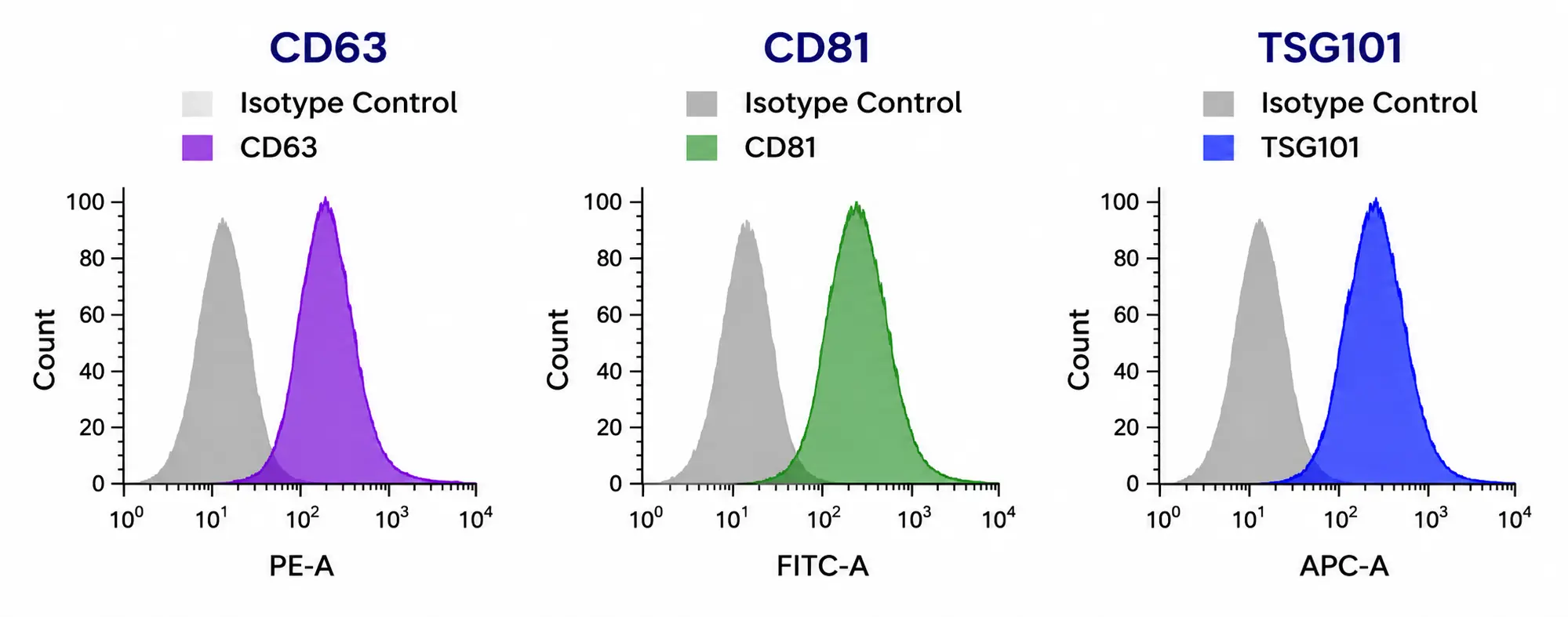
Our team can guide you through the available presentations and provide technical product information.
Together we drive regenerative medicine