Wang et al. (2022)
Osteoarthritis model
- Cartilage protection
- Reduced inflammation
- Immune response regulation
Umbilical cord MSC exosomes showed protective effects on cartilage in experimental models.

Cell science
for a healthier future
Scientific evidence
potential for joint health
Umbilical cord MSCs and their exosomes have shown great potential in preclinical and clinical studies to modulate inflammation, protect cartilage and support joint repair.

Key findings
Wang et al. (2022)
Osteoarthritis model
Umbilical cord MSC exosomes showed protective effects on cartilage in experimental models.
Chen et al. (2023)
Aged chondrocytes
Exosomes designed to act on aged chondrocytes, with promising results in cartilage regeneration.
Clinical study (2025)
Knee osteoarthritis patients
Intra-articular application of umbilical cord MSC exosomes showed signs of direct benefit in patients.
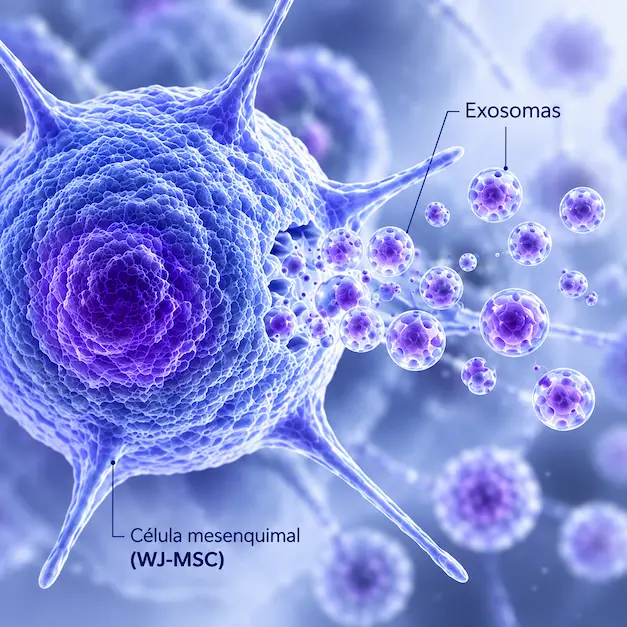
MSCs and their exosomes represent a new opportunity in joint regenerative medicine, with the potential to transform the lives of millions of people with osteoarthritis.
More movement today. More possibilities tomorrow.
Scientific references
Wang et al. (2022).
Exosomes derived from umbilical cord mesenchymal stem cells protect cartilage and regulate the polarization of macrophages in osteoarthritis.
Chen et al. (2023).
Cell-Free Osteoarthritis Treatment with Sustained-Release of Chondrocyte-Targeting Exosomes from Umbilical Cord Mesenchymal Stem Cells to Rejuvenate Aging Chondrocytes.
ACS Nano, 17(14), 13358–13376.
Estudios clínicos (2025).
Injection of human umbilical cord mesenchymal stem cell exosomes for the treatment of knee osteoarthritis: a single-center clinical research.
Journal of Translational Medicine