Multipotency
Differentiation into bone, cartilage and fat lineages.
Biological Product
Advanced cell biology for a healthier future
Multipotent cells with self-renewal, immunomodulation and multi-tissue differentiation capacity. Produced under strict quality standards for research and advanced therapies.
High purity and viability
International standards production
Batch quality control
Cell biology
Mesenchymal Stem Cells (MSCs) are multipotent cells with unique self-renewal and differentiation into bone, cartilage and fat. Beyond transformation, they act as biological control centers: they detect damage and release regenerative signals (mainly exosomes and soluble factors) reducing inflammation and stimulating repair.
Differentiation into bone, cartilage and fat lineages.
Regulate immune response and inflammation.
Release bioactive factors and exosomes.
Stimulate natural tissue repair.
Product presentations
Different concentrations for research and clinical applications.

10
million
MSC cells

25
million
MSC cells

50
million
MSC cells

100
million
MSC cells
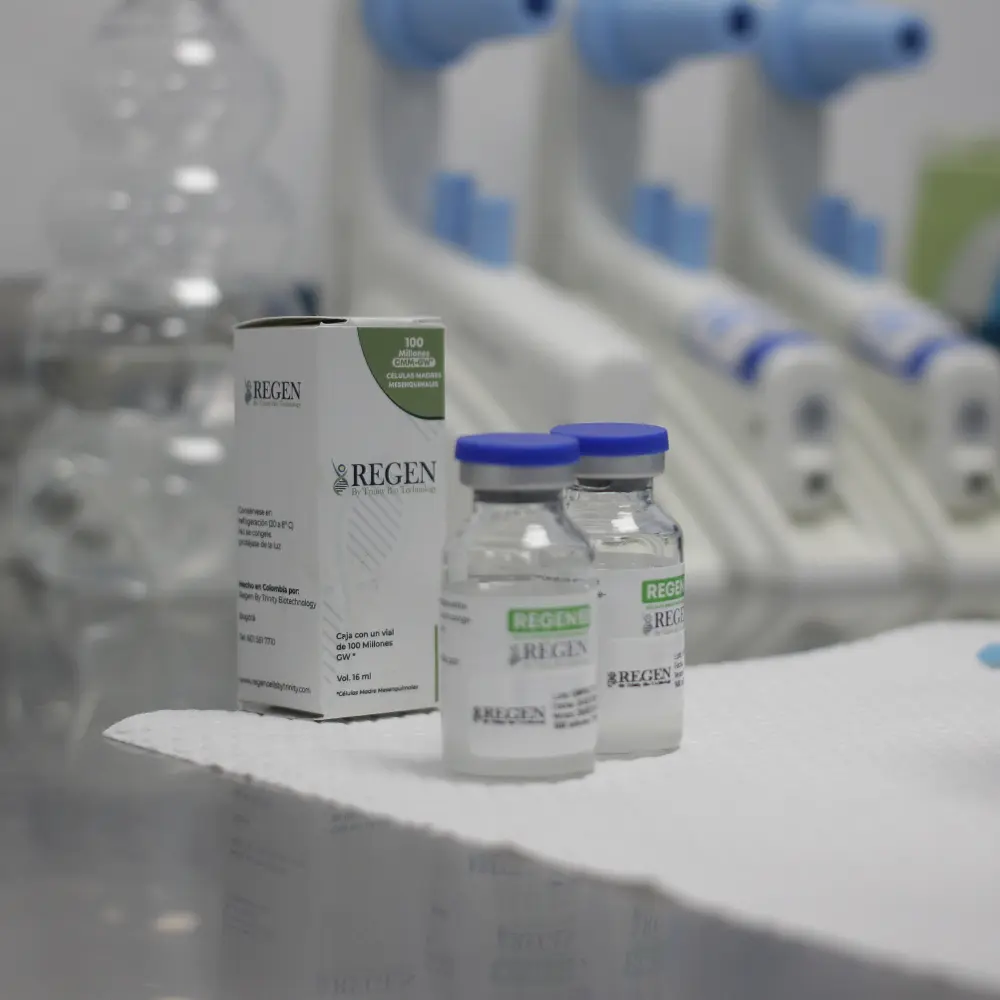
Sealed sterile vial with cell suspension. Transparent material for visual inspection.
MSCs suspended in ready-to-use carrier solution, refrigerated to preserve viability.
Clinical-adapted presentations: 2, 3, 5, 10 and 16 mL. 10, 25, 50 and 100 million MSCs.
Product release
Each MSC batch is evaluated through rigorous testing to ensure quality, purity, and functionality.
Free of bacteria and fungi
Levels within acceptable limits
Negative result
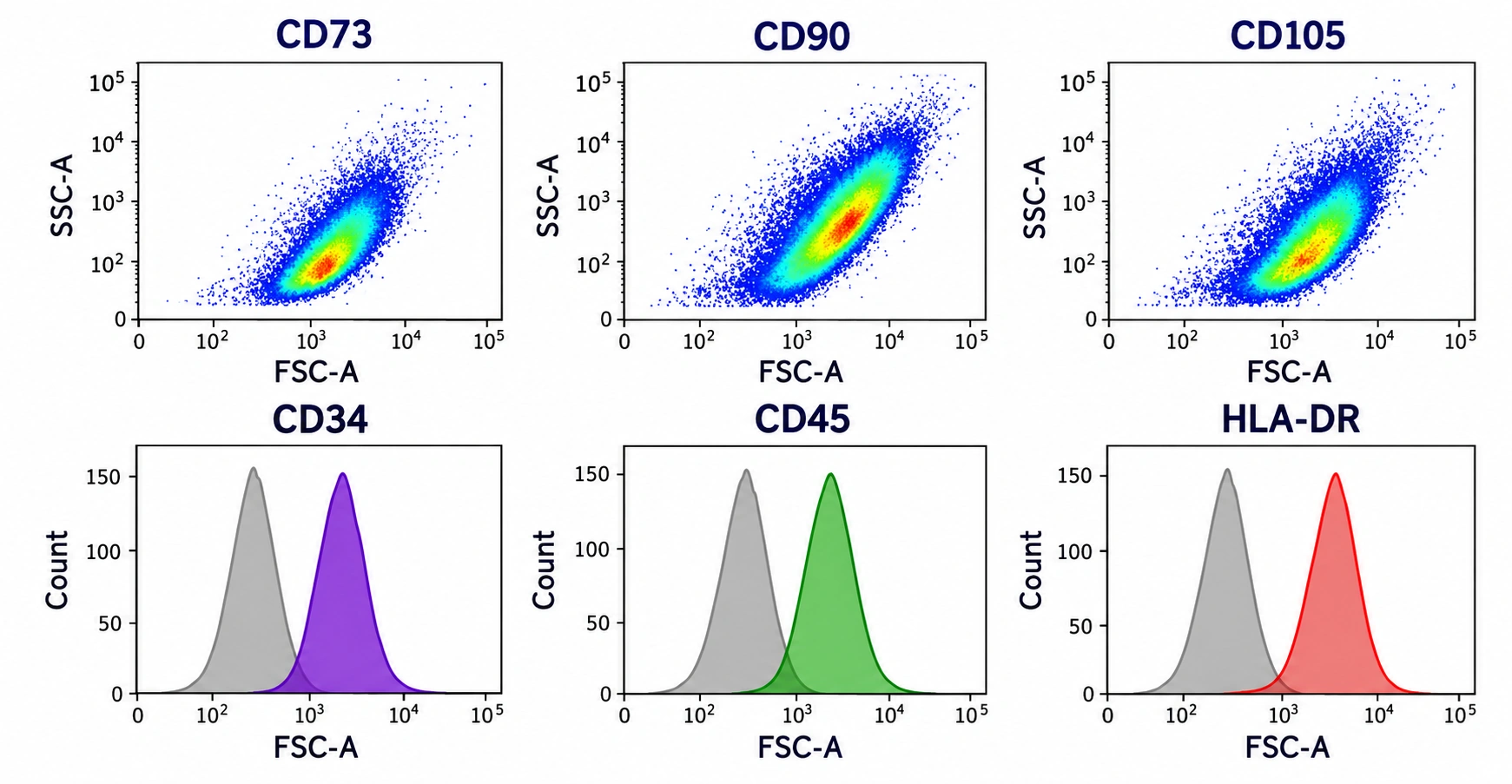
Phenotypic characterization by cytometry
High cell viability
Confirmed differentiation capacity
MSC characterization by flow cytometry
We confirm MSC identity by evaluating specific surface markers.
Cell science for a healthier future