
Cell science
for a better future
Scientific evidence
Regenerative Medicine with Umbilical Cord MSC and Exosomes
Regenerative medicine seeks to support the body's natural ability to repair and recover tissues affected by injury, disease or degenerative processes.
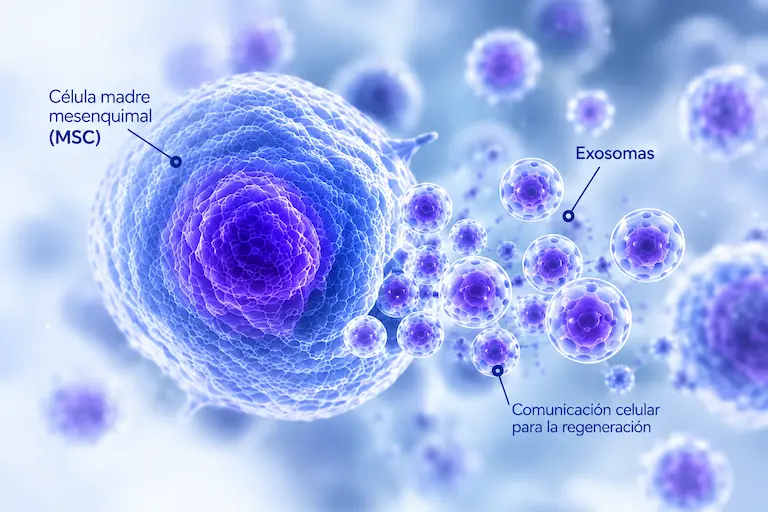
Mechanisms of action
MSCs and their exosomes release bioactive factors that can contribute to:
Potential in diverse tissues and organs
Studies have evaluated their effect in different areas, showing promising results mainly in experimental models.
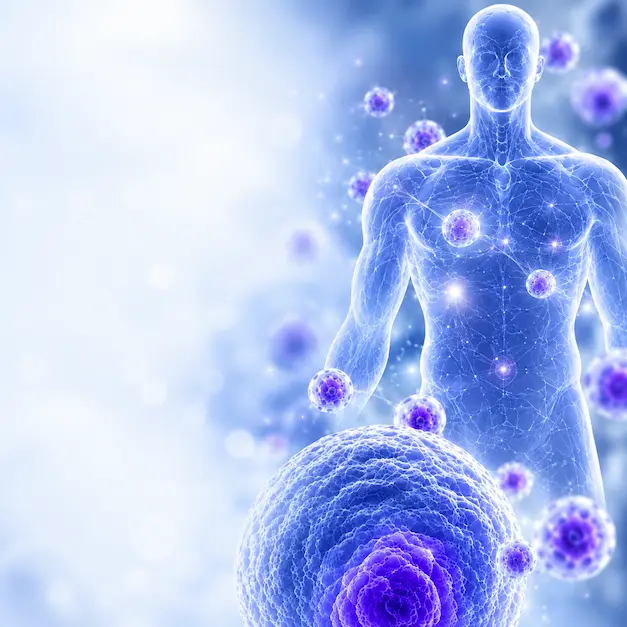
Umbilical cord MSCs and their exosomes represent one of the most promising research lines in modern regenerative medicine, due to their ability to modulate the cellular environment and support tissue repair.
Science today for a healthier tomorrow
Scientific references
Yin S. et al. (2019).
Human umbilical cord mesenchymal stem cells and exosomes: bioactive ways of tissue injury repair.
American Journal of Translational Research, 11(3), 1230–1240.
Yaghoubi Y. et al. (2019).
Human umbilical cord mesenchymal stem cells derived-exosomes in diseases treatment.
Life Sciences, 233, 116733.